I am a Ph.D. student in Electronic and Computer Engineering at
The Hong Kong University of Science and Technology,
advised by Prof. Yuan Xie.
I build systems for agentic AI infrastructure: speculative runtimes,
memory systems, and serving stacks that make long-horizon LLM agents reliable,
efficient, observable, and deployable on real AI clusters.
My work connects systems research with deployable prototypes: agent workflow platforms,
trace and evaluation infrastructure, LLM/MoE serving, GPU/CPU-GPU runtime systems,
memory-centric AI accelerators, and hardware-software co-design for sparse and irregular
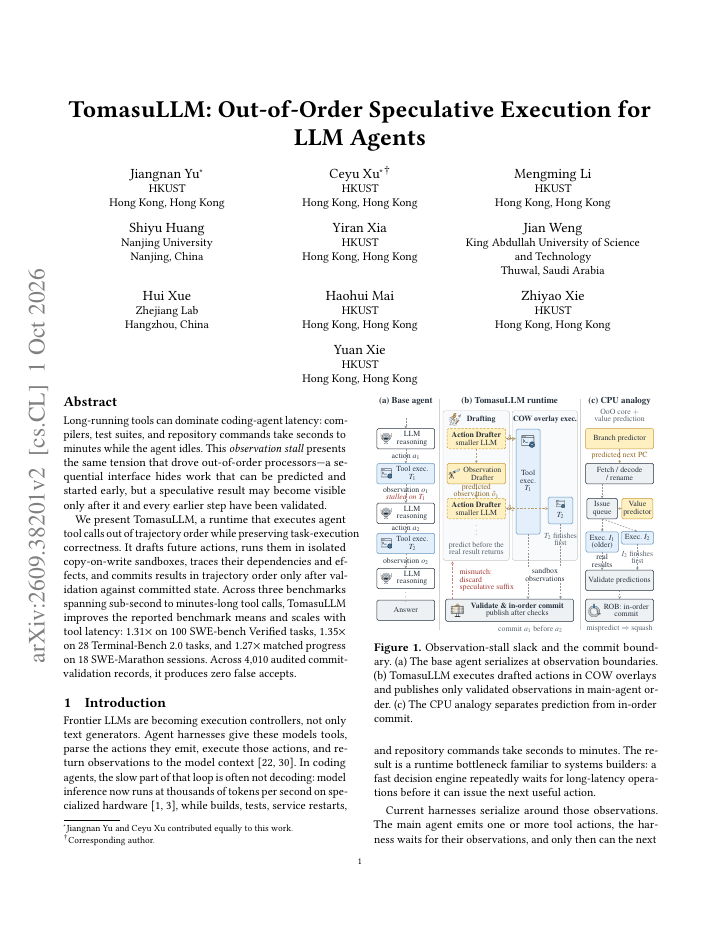
AI workloads. Recent work includes TomasuLLM, which brings
out-of-order execution to coding agents to reduce time spent waiting on tools.
Before joining HKUST, I received my M.S. and B.S. in Microelectronics from
Fudan University.
I am open to collaboration on agent runtime systems, AI infrastructure, and efficient model
serving across the software-hardware boundary.
Research Interests
Agentic AI Infrastructure: speculative execution, runtime, tool use, state management, observability, and evaluation for long-horizon autonomous agents.
Agent Memory and Trace Systems: dependency tracing, semantic locality, provenance, target construction, and replayable evaluation for coding agents and research agents.
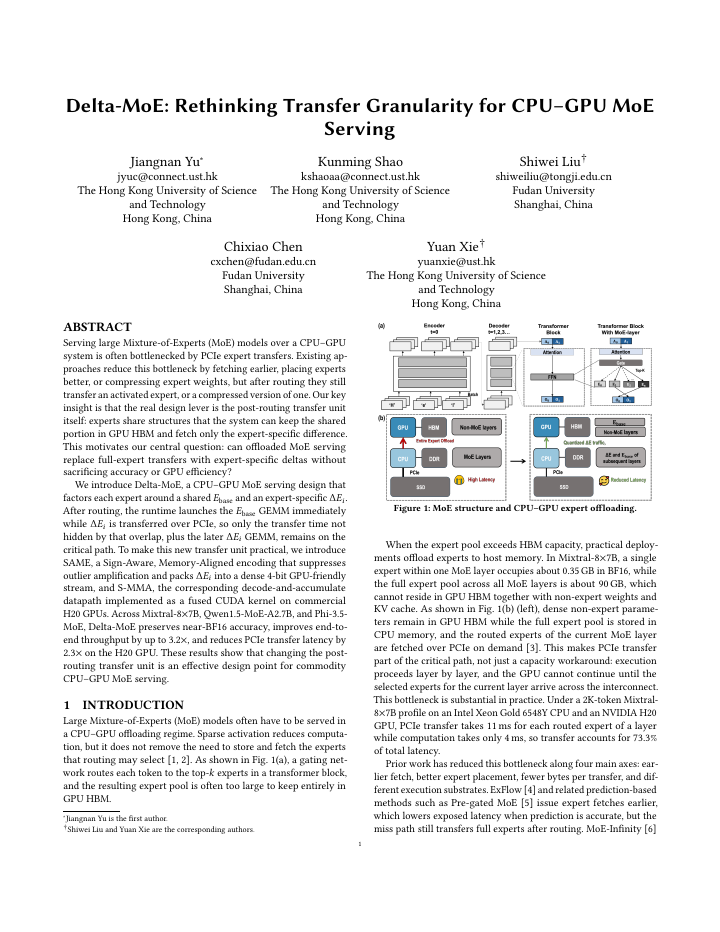
LLM and MoE Serving: CPU-GPU cooperation, KV-cache movement, batching, speculative execution, and transfer-granularity optimization.
GPU-Cluster Systems: resource-efficient orchestration for heterogeneous AI clusters and production inference workloads.
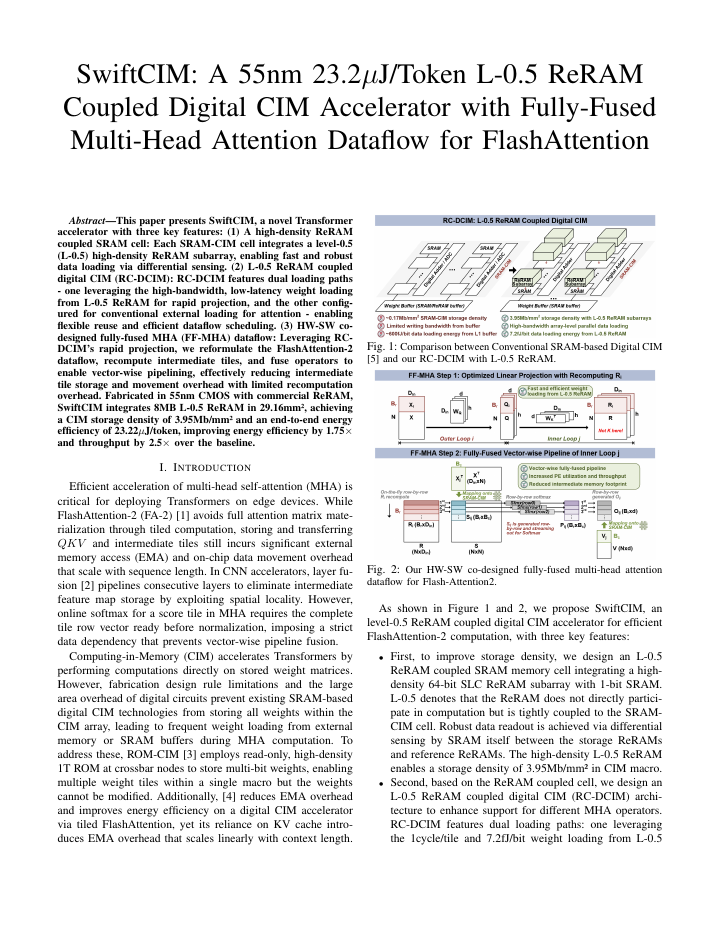
Hardware-Software Co-Design: memory hierarchy, dataflow, sparse inference, and CIM/PIM acceleration for irregular AI computation.
10/2026 Built Megahit Annotation Studio to organize client materials, inspect AI annotations against source evidence, and review suggested relationships.
09/2026TomasuLLM is on arXiv: out-of-order execution helps coding agents work ahead while tools run.
08/2026 Open-sourced SpecDecode Viz and HKUST Student Expense Agent.
07/2026 Delta-MoE was accepted to ICCAD 2026.
06/2026 SwiftCIM was accepted to ESSERC 2026.
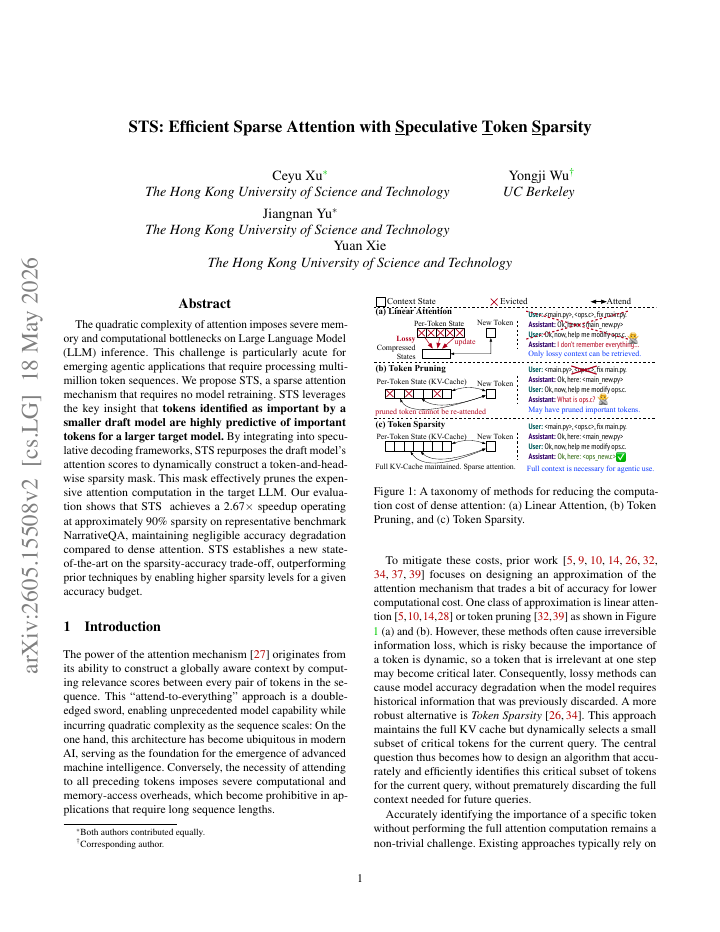
05/2026 STS was posted on arXiv.
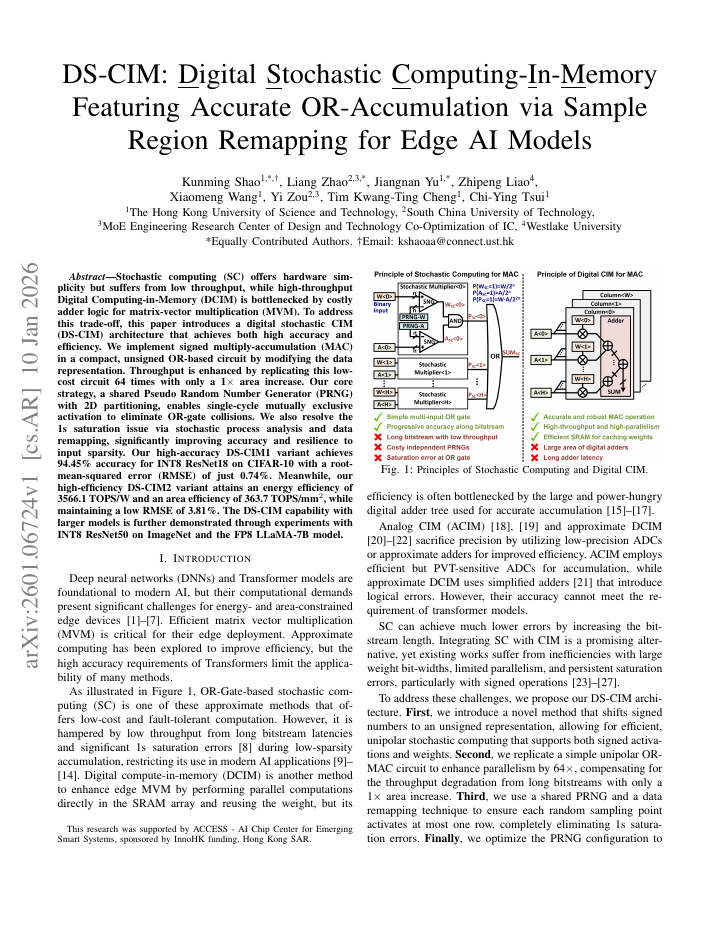
04/2026 DS-CIM was accepted to DATE 2026.
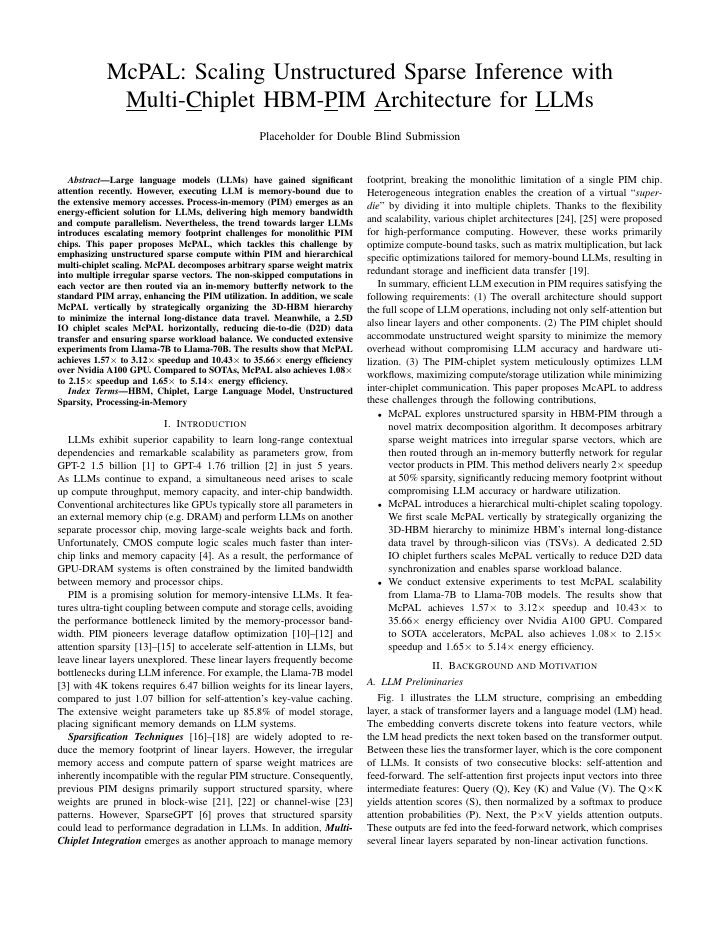
11/2025 McPAL appeared in DAC 2025.
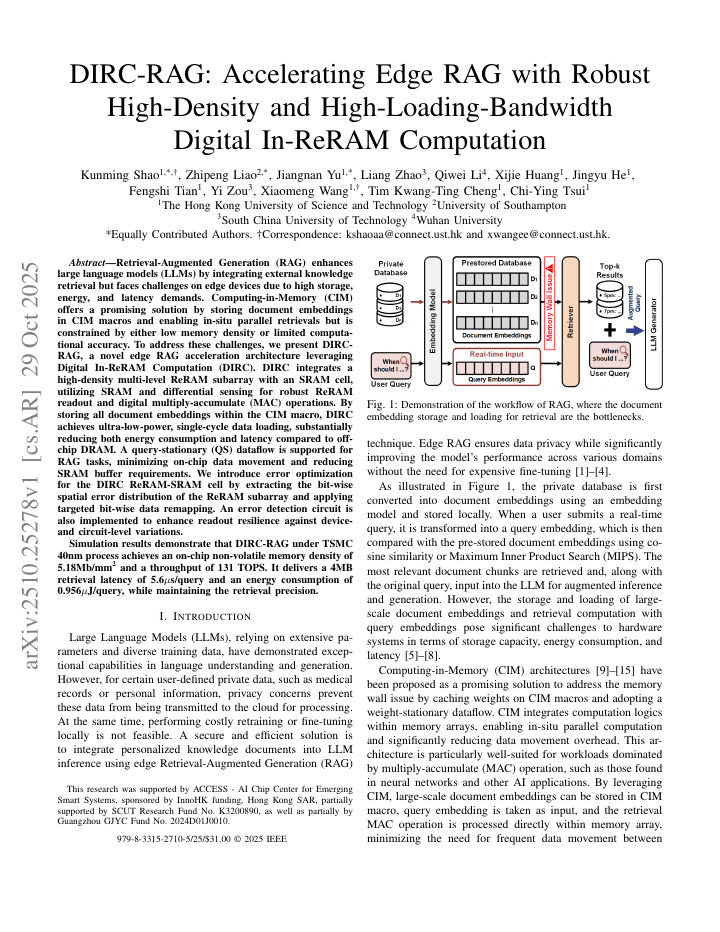
08/2025 DIRC-RAG appeared in ISLPED 2025.
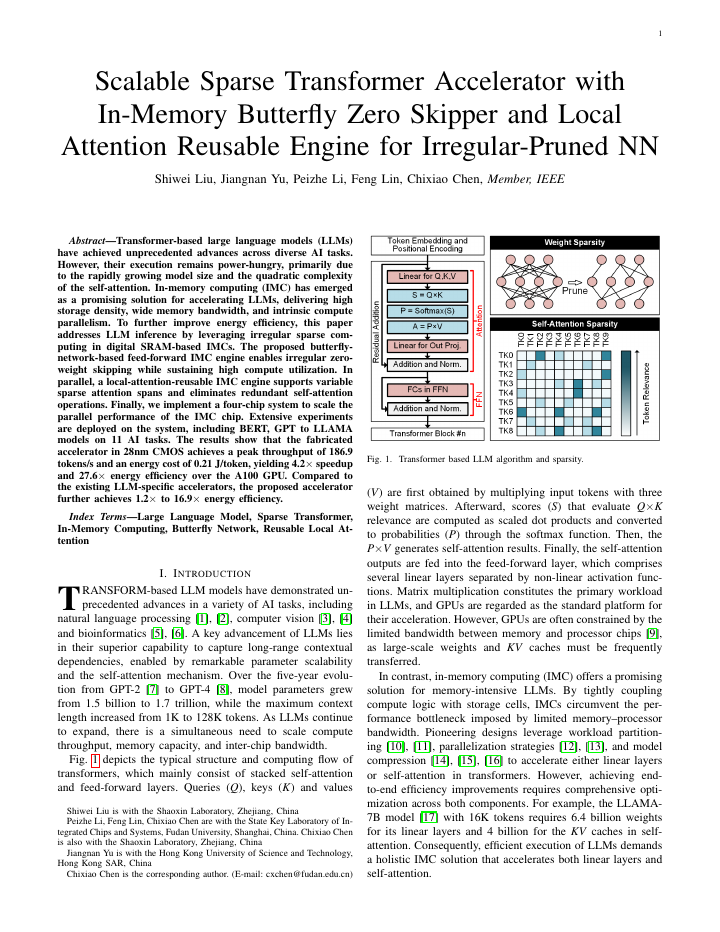
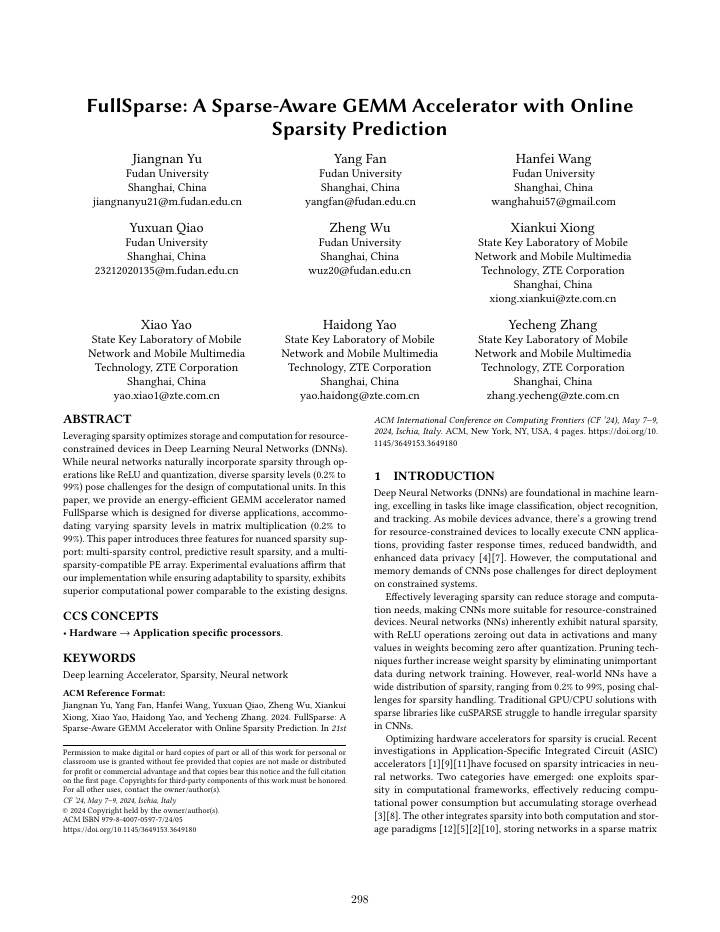
07/2024 FullSparse was published at CF 2024.
Selected Projects
A few current projects and research prototypes around agent products, agent traces,
LLM serving, and efficient AI systems.
TomasuLLM
Bringing out-of-order execution to coding agents
Long-running compilers, tests, and repository commands leave coding agents waiting.
TomasuLLM borrows out-of-order execution and in-order commit from processors to
overlap those waits with likely future work. It drafts future actions, runs them in
isolated copy-on-write sandboxes, and tracks their dependencies and effects. The
runtime validates actions, dependencies, and effects against the committed state
before committing accepted results from real executions in the agent's trajectory order.
Evaluation reports 1.31× speedup on 100 SWE-bench Verified tasks,
1.35× on 28 Terminal-Bench 2.0 tasks, and
1.27× matched-progress speedup across 18 SWE-Marathon sessions.
No false accepts were observed in 4,010 audited validation records.
Turning expert experience into knowledge you can verify
Expert experience is often scattered across client documents and conversations.
Megahit Annotation Studio imports Lark documents and chats alongside local files,
organizes materials along each client's business timeline, and uses AI to draft
annotations linked to source passages. Reviewers inspect the evidence, correct
annotations, and confirm what to keep. Relationships proposed across sources remain
suggestions until reviewers check the supporting evidence; human corrections can
become approved rules for later annotations.
Building on the earlier GrowthOS consulting workbench, this prototype focuses on
reviewing source material and making expert knowledge traceable. The separate
workbench supports contextual Chat and human evaluation of answers with and without
a knowledge base, keeping the question, conversation context, and model settings fixed.
A work-in-progress workspace for organizing coding-agent traces, target sampling,
input checks, and small vLLM/Slurm experiments.
AgentMem and AgentProf
Agent memory locality and workload profiling
Research prototypes for studying semantic locality in agent memory and profiling how
agent inference differs from ordinary chatbot serving in context growth, KV-cache
behavior, idle gaps, and batching.
HETC / LLM Serving Prototypes
Tensor compression and long-context serving experiments
Prototypes for efficient LLM systems, including modular tensor compression for fp16/bf16
tensors and speculation-guided ideas for sparse attention, KV prefetching, and long-context
serving.
Open Source Projects
Some recently open-sourced projects that make AI systems easier to inspect and everyday
research workflows easier to automate.
SpecDecode Viz
A real-time visualization playground for speculative decoding, showing draft tokens,
verification, accepted tokens, and the intuition behind serving speedups. Follow or
star the project if this helps you explain or debug speculative decoding.
If you are an HKUST student also struggling with tedious reimbursement forms, this
agent can automatically upload reimbursement materials and fill the required fields in
the HKUST finance system. You can use it as long as you have an LLM API key.